Keep Windows Closed
Do not open your windows, regardless of whether heating or cooling systems are operating. Doing so will cause condensation and may contribute to mold growth.



Mold
When mold is suspected, people have a wide range of concerns, responses, and expectations. Environmental Health and Safety is providing this basic information to help with your concerns. You can always contact us if you have questions.

Molds are fungi that can be found everywhere. They have even been found on the International Space Station. They reproduce by means of spores that are invisible to the naked eye and float through outdoor and indoor air. These fungi can grow on almost any substance where moisture is present. Molds can grow on ceilings, walls, under sinks, drywall, ductwork, furniture, and wood, among other materials. When there is a lot of moisture present, high humidity, and temperatures are above 65°F, mold spores become active and start to grow rapidly. There are many types of molds, and none of them will grow without water or moisture. Outdoors, molds can break down dead organic matter, such as fallen leaves and dead trees. There is no practical way to eliminate all mold and mold spores in the indoor environment. The key to controlling indoor mold growth is controlling the moisture source.
Black Mold

When the term “black mold” is mentioned, people tend to become more concerned. “Black Mold” is an inaccurate term as there are many molds that are black in color. Professionals agree that the term black mold refers to Stachybotrys chartarum.
Black mold is a type of fungus that looks dark green or black and can look wet, fuzzy, or slimy, growing deeply into the material it infests. There are many kinds of black mold, but when most people refer to it, they’re referring to Stachybotrys chartarum (S. chartarum). It grows and spreads on materials that contain a lot of cellulose, including paper products, wood products and drywall. Cellulose is a fiber in fruits, vegetables and other plants. It’s part of the cell wall.
Black mold needs warm temperatures and moisture to grow and spread. It commonly appears in damp or water-damaged areas of your home, such as basements, showers and windows.
While it produces mycotoxins and is associated with the terms “sick building syndrome”, resent research indicates its health effects may be similar to other common molds, and not the server effects suggested by earlier reports.
For most people, black mold won’t make you very sick or kill you.
Health Effects from Mold Exposure

Some people are affected by the presence of mold while others can live in places with a large amount of mold and not experience any symptoms. Allergic reaction is the most commonly reported health effect of mold exposure. If you cough, wheeze, or have difficulty breathing around mold, you may be sensitive to certain molds. If continuously exposed to mold, some people may develop symptoms such as watery, itchy, burning or red eyes; nose or throat irritation; sneezing; coughing or wheezing; constant headaches; memory problems or mood changes; aches and pains; and in some cases, hives, welts, or skin rash. Mold spores cannot be seen but can be inhaled, which can cause irritation or infection in the lungs and make it harder to breathe.
Those who are more likely than others to develop symptoms from mold exposure include young children, the elderly, pregnant women, and people with asthma or other respiratory diseases. People with suppressed immune systems (e.g., HIV/AIDs infection, organ transplant patients, chemotherapy patients) should avoid heavy mold infestations. If possible, susceptible individuals should not live-in buildings where mold is growing, and should consult their family physician if symptoms develop or persist.
Prevention
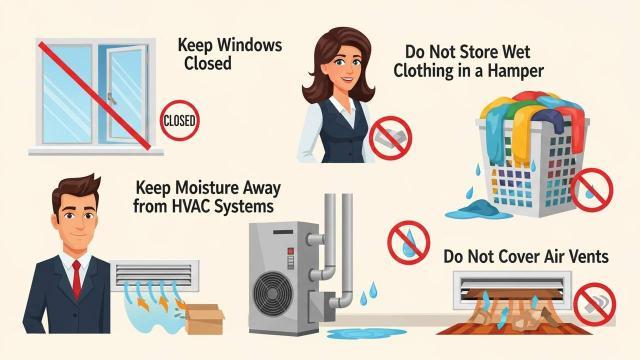
There is no practical way to eliminate all mold and mold spores in the indoor environment, but you can prevent excessive mold growth by controlling moisture in your living area.
Mold needs both a food source and moist conditions. Routine cleaning of surfaces and reducing the presence of moisture and damp materials are highly effective prevention measures.
Following these guidelines can prevent mold and mildew growth:
Do not open your windows, regardless of whether heating or cooling systems are operating. Doing so will cause condensation and may contribute to mold growth.
Do not leave wet or damp clothes, towels, or shoes in closets. Hang these items on towel racks or place them on drying racks until they are completely dry.

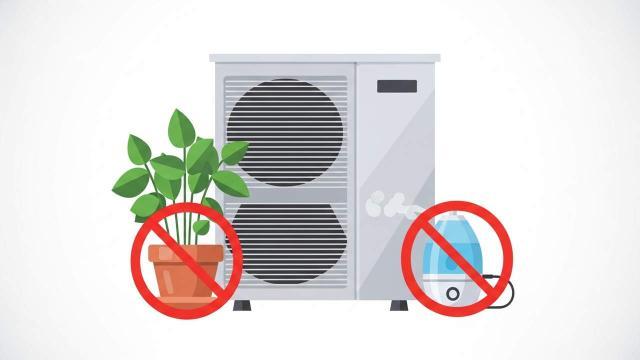
Do not place potted plants, or any other source of moisture, on or around heating and cooling units.
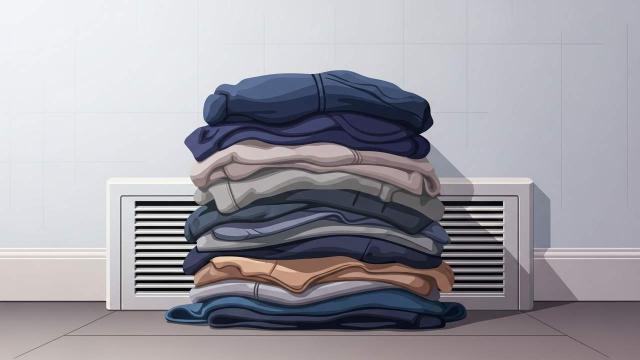
Do not place anything in front of your heating or cooling unit and air filter. Doing so blocks the airflow from the unit and makes mold growth in your housing more likely.
Use air conditioners and dehumidifiers. On the thermostats, always have the fan set to “AUTO” when using the air conditioner, and do not use an air conditioner if you have the windows open.
Use exhaust fans to circulate indoor moisture (from cooking, dish-washing, showering), avoid using rugs in areas with excess moisture (from cooking, sinks, showers).
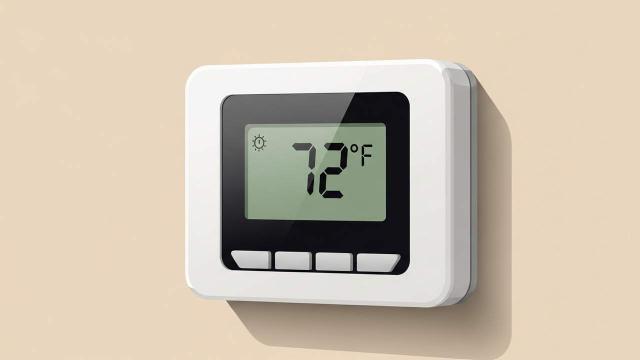
If your housing contains a room thermostat, do not place heat-generating appliances directly underneath it.
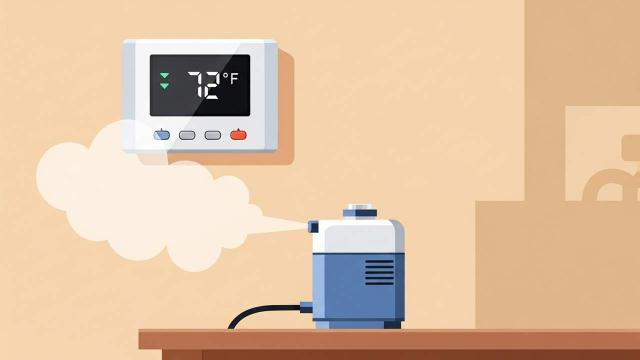
Small amounts of mold can be easily cleaned with a general household cleaner. Maintain good housekeeping practices, including cleaning your room, bed linens, clothing, and towels on a regular basis. Please see the cleaning tips section of this document.

Report any water leaks via the work order system.
If the air conditioner is not working place a work order to have it fixed.

If you believe there is a mold or mildew issue in your room that is pervasive or resistant to removal, report it by submitting a work order with Facilities Management.
Providing complete and accurate information is critical in Custodial, Environmental Health and Safety, and Facilities Management Response. When submitting a work order request, include the room number, location in the room, and other details surrounding your concern.
The Work Order Service Team centrally receives all work order requests. After review and the inclusion of additional information if needed, the work order request routes to the correct Facilities Management Shop.
Shop Supervisors assign personnel to address the work, prioritizing projects by urgency. Critical incidents like fires and floods are prioritized above routine maintenance like a burned-out light bulb or loose floor tile.
A Technician responds to the work request, becoming familiar with the issues, identifying needed resources to resolve them, and then perform the required work.
Housekeeping staff performs an initial evaluation of the area using a checklist. They do a visual and physical inspection looking for mold growth, signs of water damage, HVAC issues, and smell for musty odors. If they find an area of mold growth less than 10 square feet, they clean it. If the area is larger than 10 square feet, Environmental Health and Safety is contacted for consultation.
Upon conformation of mold, Facilities Management works to identify and eliminate the source of moisture. When the cause of the moisture is due to building system failures, Facilities Management repairs the deficiency to prevent the mold growth reoccurrence.
When the cause of the moisture is not due to a building system failure, this information is communicated to Residential and Commuter Life and/or the resident.
Often, the resident needs to rearrange belongings in their housing or behaviors.
When conditions are indeterminate, Environmental Health and Safety is contacted for consultation.
Answer: Yes, EHS can conduct air sampling using professional equipment. Air sampling for mold is rarely recommended. This is because the source of musty, moldy odors in a space can usually be determined by a thorough visual inspection of the building and associated ventilation system. Usually, mold contamination can be identified and then eliminated
Answer: Not usually. Mold standards for judging what is and what is not an acceptable quantity of mold have not been set. The best practice is to remove the mold and work to prevent future growth.
Answer: If you are tempted to call a third-party vendor that provides mold inspection services, please place a work order or call EHS. EHS has professional staff that are certified mold inspection and mold remediation. Cost incurred by such vendors will not be covered by the University.
Answer: Home mold test kits are generally unreliable for accurately diagnosing a mold problem because they fail to provide meaningful context, can be misleading, and don't offer the comprehensive, controlled approach of professional inspections. Professionals are recommended for detecting and addressing mold because they have the expertise, specialized equipment, and ability to interpret results within the framework of a thorough visual inspection and sampling plan.
The U.S. Center for Disease Control recommends not using home mold test kits for testing.
Longwood University has an established inspection, sampling, and remediation program for mold.
 Housekeepers are responsible for routine cleaning of public areas, such as hallways, stairwells, common bathrooms, and lounges.
It is recommended that you bring or have a "cleaning kit" (broom, dust pan, sponge, all-purpose liquid cleaner, etc.) in order to keep your room clean.
The following cleaning instructions are designed for students who have bathrooms or common areas that are not cleaned by housekeeping staff. In those areas, it is the responsibility for students to work together to design a cleaning schedule.
The frequency for cleanings mentioned here is a recommended minimum. You may find that you need to clean more frequently than these guidelines suggest.
These instructions are important for the health and well-being of each resident, and also to make sure that facilities are maintained and in working order. We recommend that you clean your spaces on a regular basis. If you have questions or concerns, please talk with your RA or REC.
You can use any non-abrasive all-purpose cleaner such as Simple Green, Lysol, Pine Sol, Mr. Clean, Clorox, or Formula 409. If you have questions about using a certain cleaner, please contact Residential and Commuter Life.
Please Note: Use of any scented cleaners should be discussed with your apartment or suitemates.
Clean tables, desks, wardrobes, and cabinet interiors/exteriors with a mild, non-abrasive cleaner to remove any dirt or food residue.
Floors should be cleaned every three weeks. Use a mop, Swiffer, or broom to clean.
Move furniture, sweep the floor, and use a dustpan to remove debris. Do not sweep the debris into the common areas and leave it there. Return furniture to original location and sweep again, if necessary.
Trash and recycling should be emptied whenever the trash bag is full. Don't wait until the bag is overflowing!